
Social Impact Heroes: Why & How Paul Kiesel of ‘Speak Up for Justice’ Is Helping to Change Our World
Authority Magazine Editorial Staff
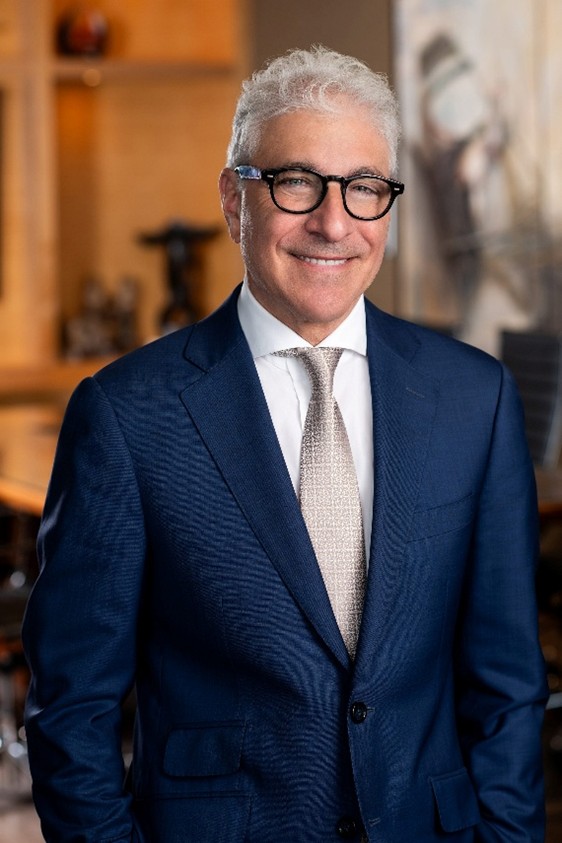
We had the pleasure of talking with Paul Kiesel. Paul is a nationally recognized trial attorney known for his work in high-stakes, high-impact litigation, representing individuals and communities harmed by corporate misconduct, environmental disasters, and consumer safety failures. With decades of courtroom experience, he has established a reputation as a powerful advocate for justice and a trusted voice on issues that impact the integrity of the legal system. His commitment to protecting judicial independence led him to found Speak Up for Justice, a national, nonpartisan movement uniting legal leaders to confront the escalating threats and intimidation facing judges across the country.
Thank you so much for joining us! Can you tell us a story about what brought you to this specific career path?
I’ve spent my entire career in high-stakes litigation, standing in courtrooms with people whose lives had been upended by corporate misconduct, environmental disasters, and consumer safety failures. Those cases taught me something simple but profound: none of that work matters if people lose faith that our judiciary is independent, trustworthy, and strong enough to deliver justice without fear or favor.
In recent years, I began to see that foundation start to fracture, not slowly, but with an escalation none of us had witnessed before. Judges aren’t just being criticized for their rulings. They are being vilified, threatened, stalked, and targeted at home. According to the U.S. Marshals Service, 564 threats have already been logged against federal judges in 2025 alone, surpassing the total for all of 2024. And that number doesn’t account for state judges, who handle roughly 95% of all cases in America and face many of the same dangers with almost no formal tracking system.
In the year 2000, I had the honor of representing the Austrian Jewish community, on a pro bono basis, attempting to recover damages for the loss of property, or work, businesses and more. I began to study, for the first time, in detail the history of the rise of the Third Reich and realized it started with silence. In 1933, Adolf Hitler terminated hundreds of Jewish judges and disbarred Jewish attorneys. At that time, remarkably, nobody was speaking up. When the administration began to attack law firms and law firms were “taking a knee” I realized the legal community needed to be heard from. That was when the wake-up call happened for me.
In more recent years, another national wake-up call came in 2020. That was the year a gunman, disguised as a FedEx driver, came to the home of U.S. District Judge Esther Salas. He opened fire, gravely wounding her husband and murdering her only child, 20-year-old Daniel, because the shooter was angry about her rulings.
The country mourned. But as time passed, something disturbing began to unfold. Years later, Daniel’s name began appearing again; not in remembrance, but as a weapon. Judges and even their family members across the country started receiving pizzas, ordered in Daniel’s name, delivered to their chambers and their homes.
Each pizza delivery sent a chilling message: We know who you are. We know where you work, we know where you live. Do you want what happened to Daniel to happen to you?
That’s when it became unmistakably clear: if lawyers, judges, and citizens stayed silent, we weren’t just failing our colleagues, we were risking the very foundation of democracy. An intimidated judge is not a free judge. And a judiciary that is not free cannot protect anyone’s rights.
Speak Up for Justice was born out of that realization. What started as a simple call to action has grown into a national, nonpartisan movement uniting attorneys, judges, legal scholars, organizations, advocates, and students who refuse to accept threats and intimidation as “the new normal.”
We host forums where judges can speak openly about what they’re facing. We push back against disinformation that paints them as political actors rather than neutral arbiters. We advocate for tangible protections so judges can do their jobs without fearing for their lives.
In one of those forums, we brought together judges from different countries who shared their powerful, firsthand accounts of how the erosion of judicial independence unfolded in places like Venezuela and Poland. In Venezuela, Judge Eleazar Javier Saldivia witnessed the gradual dismantling of the judiciary under authoritarian control. Once a country with a functioning Supreme Court and a constitution designed to uphold checks and balances, Venezuela’s judicial system was stripped of its power. Judge Saldivia faced threats and harassment simply for doing his job, and his courageous stand for justice ultimately forced him into exile.
In Poland, Judge Dorota Zabludowska and many of her colleagues endured smear campaigns and professional retaliation for opposing political pressure. Both judges, through their painful experiences, warned us that the same threats to judicial independence are now appearing in the U.S. The stories they shared were eye-opening, and they made it clear that the weakening of our judiciary is not just a legal issue — it’s a democratic one.
Speak Up for Justice is standing alongside judges, attorneys, and every individual fighting on the front lines to preserve the rule of law and defend democracy. As the challenges grow, it’s vital that we all remember: when the judiciary falters, so too does the foundation of our democracy.
I’ve represented thousands of clients, but this work feels different. It’s not about one plaintiff or one case. It’s about defending the only system we have that stands between the rule of law and the rule of force. The time to act is now, before it’s too late.
Can you share the most interesting story that happened to you since you began leading your company or organization?
Yes. The sheer number of individuals who have reached out to me, both by email and in person, expressing their support for what we’re doing with Speak Up for Justice has been extraordinary. What has stood out most is how many judges, lawyers, and students have shared versions of the same story: that they felt alone in their concerns until they heard others speak openly.
After our early forums, I heard from judges who had been facing threats in silence, unsure whether what they were experiencing was isolated or part of a larger pattern. Others told us that simply hearing their peers — federal judges, state judges, and even judges from abroad — describe similar intimidation helped them feel less isolated and more empowered to speak up.
I’ve also heard from law students and younger lawyers who said the forums changed the way they understood the stakes. Many realized, often for the first time, that judicial independence isn’t a distant or abstract concept and that they have a role to play in protecting it.
And what has surprised me, in the best way, is how everyday people, completely outside the legal world, are now reaching out as well. They’re starting to understand that the rule of law isn’t something that lives only in courtrooms or law schools. It shapes everything from the safety of their communities to the fairness of their workplaces to the stability of their daily lives. Many have told me they never connected these dots until they heard judges speak about the pressure and intimidation they face.
These kinds of interactions — notes from judges, messages from lawyers, conversations with students, and citizens across the country — are some of the most meaningful moments for me. They show that Speak Up for Justice is becoming more than a series of events. It’s becoming a community for people who refuse to accept that fear and intimidation are simply the cost of doing justice.

It has been said that our mistakes can be our greatest teachers. Can you share a story about the funniest mistake you made when you were first starting? Can you tell us what lesson you learned from that?
I wouldn’t describe it as a mistake, but in hindsight it could have been. When I started this initiative, I went straight to the very top. My first outreach was to individuals at the highest levels of the judiciary — including a former U.S. Supreme Court Justice — the kind of people most would assume were far out of reach.
Under normal circumstances, that kind of boldness might have backfired. It could have seemed unrealistic or overly ambitious.
But it didn’t. Every one of them responded. They not only engaged, they embraced the mission. And that was incredibly affirming. It confirmed that the concerns we were raising weren’t fringe or exaggerated. They were real, urgent, and resonating at the highest levels of the legal community.
So what could have been a misstep ended up reinforcing the importance of this movement. Sometimes what feels like reaching too high is exactly what you’re supposed to do and the response you get tells you just how big the issue really is.
Can you describe how you or your organization is making a significant social impact?
We launched Speak Up for Justice in April 2025, when we realized that our democracy was beginning to show the same early warning signs that have led to democratic decline in other countries. Around the world, the weakening of a democracy often begins quietly, as threats, intimidation, and political rhetoric erode trust in the institutions that hold a nation together.
When we saw those patterns emerging here, we knew we had a responsibility to act.
Our impact starts with something very basic: we’re breaking the silence.
At one of our early national forums, Judge Esther Salas shared the story of the day a gunman came to her front door and opened fire, killing her only son Daniel and gravely injuring her husband because of a ruling she had made. As she recounted that moment, you could feel the air leave the room. Judges, lawyers, and students sat in absolute silence, many hearing for the first time what judicial threats truly look like when they turn into violence.
What struck all of us wasn’t just the unimaginable loss she endured, it was the clarity with which she connected her personal tragedy to what judges across the country are now facing. Her story wasn’t only about the past; it was a warning about what happens when intimidation becomes normalized and when judges feel they have no safe place to speak.
That moment crystallized our mission. We realized we weren’t simply building a program, we were offering a lifeline to judges who had been suffering in isolation, many of them convinced they had to endure these threats alone and in silence.
Since then, what began as a simple idea has grown into a national grassroots community. Our first program drew more than ten thousand viewers who were hungry for a conversation that had been missing from public discourse. By the time we hosted our most recent program, more than seventy thousand people had watched. The numbers matter, but they are not the heart of the story. The real impact shows up in the judges and lawyers whose sense of safety and willingness to speak have shifted because they finally feel seen and supported.
One of the most extraordinary developments has been this: judges are speaking publicly. Judges almost never do that. The entire culture of the judiciary teaches them to let their opinions speak for them, to remain quiet in the face of criticism, and to stay far from the public spotlight. For decades, even the harshest political attacks on judges were met with silence because that was the tradition.
But the climate has changed. Judges are now being called rogue and corrupt. They are being portrayed as enemies. Some have been depicted as threats to the country simply for applying the law. The attacks have moved far beyond disagreement with a decision. They have become personal, sustained, and dangerous.
This shift has forced judges into an impossible position. They can remain silent and watch the attacks escalate, or they can break with tradition and speak openly about what is happening. Many have told us they are speaking now because of what they heard from colleagues who lived through democratic decline in places like Venezuela and Poland. Those judges said they waited too long to raise their voices, and by the time they did, it was already too late. Their warning is simple. If you stay silent long enough, you will lose the democracy you are trying to protect.
That is why one of our most powerful moments happened when U.S. Supreme Court Associate Justice Anthony Kennedy stood alongside judges from Venezuela and Poland. Seeing a retired Supreme Court Justice and judges who survived democratic backsliding share the same stage, and speak with the same urgency, cut through every partisan frame. It reminded the public that this is not a debate about ideology. It is a question of whether the rule of law can survive pressure aimed at silencing the people who uphold it.
Their warning became even more real when Judge Eleazar Saldivia from Venezuela told our audience that the collapse of Venezuela’s judiciary did not arrive with soldiers or force. It arrived quietly, through legal tools aimed at reshaping the courts, and by creating a climate where judges feel too scared to speak. His message was not a theoretical lesson. It was a roadmap of exactly how democracy can die.
Against that backdrop, the courage of judges who have spoken at our forums has been extraordinary.
It is Judge Jennifer Johnson in Florida, who lived for months knowing a deepfake video existed of her being murdered with a hatchet and a shotgun while she waited more than five months for action from law enforcement. When she shared her story, she was not only recounting trauma. She was telling other judges that what they are experiencing is real and unacceptable.
It is Judge Carroll Kelly, who endured cyberattacks, stalking, and threats from a trained sniper, and lived with law enforcement posted at her home around the clock. Her experience makes clear that these are not private incidents faced by a few individuals. They are national signals that intimidation has become a tool aimed at the judiciary.
It is Judge John C. Coughenour, who was the target of a terrifying swatting incident and a mailbox bomb threat after he issued a ruling upholding birthright citizenship. What he faced was not disagreement with a legal opinion. It was a deliberate attempt to frighten a federal judge into silence.
These stories have reached audiences across the country because we have worked to lift them out of the shadows. Through our partnerships with media platforms like Meidas Touch, thousands of people who had no idea these threats were happening now understand the scale of the danger.
And through our collaboration with political figures like Senator Chris Coons, we have helped build support for the Countering Threats and Attacks on Our Judges Act, which would finally give state judges meaningful security protections.
We are also connecting U.S. judges with international figures like Justice Richard Goldstone of South Africa and judges in Poland who have endured retaliation and surveillance. These relationships have become an early warning network. People who have lived through democratic decline are helping us recognize the patterns in real time so we can act before it is too late.
We’re seeing something extraordinary happen. Judges are not only standing as the last line of defense, they are choosing to speak out, to educate the public, and to remind the country what is truly at stake. When they step forward, they are doing more than defending themselves. They’re teaching Americans, in real time, that the rule of law isn’t an abstract legal concept. It is the operating system of our democracy.
And the response has been just as powerful. Young lawyers refuse to look away. Students are asking where they can step in. Members of the public, people who never imagined they would care about judicial independence, are suddenly realizing that nothing in this country works without it. America can be a sleeping giant, but I firmly believe it is waking up. People are beginning to understand that if the rule of law collapses, every right they rely on collapses with it.
That is the impact of Speak Up for Justice. Not just judges who refuse to be intimidated. Not just lawyers who refuse to normalize threats. It is a public awakening to a simple but profound truth: the rule of law is the one principle every American depends on, whether they know it or not. It is what keeps the powerful accountable, what makes rights enforceable, what allows disagreements to be resolved peacefully, and what ensures that justice applies to all of us, not just the most privileged or the most protected.
The future of our democracy will be shaped by whether we protect the people who protect the law. And today, for the first time in a long time, you can feel the country beginning to understand exactly why that matters.
Can you tell us a story about a particular individual who was impacted or helped by your cause?
It’s difficult to focus on just one story, because what Speak Up for Justice is doing goes far beyond highlighting individual judges. We’re helping Americans understand something they rarely see: the health of our entire democracy depends on the safety and independence of the people who uphold the rule of law.
One of the biggest misunderstandings in this country is the belief that democracy is a spectator sport, something that happens “in Washington” or “in the courts.” It isn’t. It’s active, it’s participatory, and it only works when the public understands why an independent judiciary is the safeguard for everyone’s rights, regardless of politics or ideology.
Every time we host a forum, every time a judge steps forward to share what they’ve endured, we see something shift. Judges stop feeling like isolated targets, and the public stops seeing them as distant figures in black robes. People begin to understand that judges are human beings with families, routines, and vulnerabilities, and that they are facing threats at a rate we’ve never seen before, simply for doing their jobs.
And when Americans hear not just one story but dozens with the same disturbing patterns, the stakes become undeniable.
- They hear about federal judges who received hundreds of violent voicemails after a ruling, including explicit death threats.
- They hear about a judge whose home was “swatted,” with armed officers storming inside because of a false report made in retaliation for a lawful decision.
- They hear about a state judge targeted with a deepfake video depicting her own murder.
- They hear about judges whose children and spouses have been terrorized with unwanted pizza deliveries ordered in the name of Judge Esther Salas’s murdered son, Daniel, a grotesque tactic meant to remind them that someone knows where they live.
None of these stories are theoretical. They are happening to judges across the country, in red states and blue states, appointed by presidents of both parties.
As these stories become known, something powerful is taking place. We are seeing momentum grow around judicial safety in a way that hasn’t happened before. Congress, including bipartisan leaders like Senator Chris Coons, is pushing forward legislation aimed at protecting judges who currently have minimal security. State courts are reassessing their protocols. Court leaders are speaking honestly about the risks they face, many for the first time in their careers.
That’s the real impact of this movement.
When people hear directly from judges, they begin to see the judiciary as human, vulnerable, and essential, not political actors, not partisan players, but guardians of the rule of law. And once the public sees that clearly, the instinct to defend the courts becomes stronger than any ideological divide.
Our hope, and the reason we continue hosting these forums, is that greater understanding will translate into lasting protections: safer judges, stronger institutions, and a society that recognizes that democracy doesn’t defend itself. It requires people, informed, engaged, and unwilling to stay silent in the face of intimidation.
Speak Up for Justice is helping create that shift. It’s not about one story, or one judge. It’s about protecting the system that protects all of us.
Are there three things the community/society/politicians can do to help you address the root of the problem you are trying to solve?
The first thing everyone needs to understand is this: silence is not neutral. When threats and intimidation against judges go unanswered, they don’t fade away, they grow. If we want an independent judiciary to survive, we have to treat attacks on judges as attacks on the rule of law itself, not as background noise.
From my perspective, there are three key things communities, institutions, and political leaders can do.
- Speak up and make it clear this is about democracy, not party.
We need more people to say out loud that threatening judges is unacceptable, no matter who appointed them or how we feel about a specific ruling. Lawyers, law students, business leaders, bar associations, faith communities, and everyday citizens can all help by:
- Attending and sharing our Speak Up for Justice forums (you can register here: https://speakupforjustice.law/)
- Writing op-eds and resolutions
- Using their own platforms to explain why judicial independence protects everyone
The message should be simple: you can disagree with decisions, you can appeal rulings, you can advocate for new laws, but you cannot try to scare judges into deciding cases your way.
- Demand responsible leadership from people in power.
Elected officials and public figures have a special responsibility because their words travel further and faster. When they single out judges, question their integrity, or portray them as enemies, it can legitimize the anger that leads unstable individuals to act.
We need leaders, across the political spectrum, to:
- Stop using judges as rhetorical targets
- Correct misinformation when a decision is mischaracterized
- Publicly condemn threats and harassment when they occur
That’s not about protecting judges from criticism. It’s about making sure criticism doesn’t cross the line into dehumanization and danger.
- Invest in civic understanding and long-term protections.
Ultimately, people are more likely to defend what they understand. We need stronger civic education and public awareness about what judges actually do, how our court system works, and why independence and safety are not perks, they’re prerequisites for fair decision-making.
That means:
- Teaching students how the judiciary fits into our constitutional structure
- Providing the public with clear, accessible information about the courts
- Supporting practical measures, like improved security, better threat reporting, and updated laws, that protect judges and their families
This is exactly where Speak Up for Justice is focused. Our forums give the public a front-row seat to what judges are facing and why it matters. We welcome community leaders, educators, and advocates as partners and panelists. This is not a conversation for lawyers only; it belongs to everyone who cares about living in a society where disputes are resolved by law rather than by force.
If someone wants to act today, the simplest step is to attend one of our virtual forums or watch a past one. They’re open to the public. You can register at https://speakupforjustice.law/.
Democracies don’t collapse all at once. They erode when people start to believe that institutions like the courts aren’t worth defending. The good news is that the opposite is also true: when enough people decide that an independent judiciary is non-negotiable, it becomes very hard for those who rely on threats and intimidation to succeed.
Can you please give us your favorite “Life Lesson Quote”? Can you share how that was relevant to you in your life?
It comes from Hillel the Elder: “If I am not for myself, who will be for me? And if I am only for myself, what am I? And if not now, when?”
For me, that quote captures the balance between personal responsibility, collective obligation, and urgency. It reminds me that I have a duty to use whatever voice and experience I have not just to protect my own interests, but to stand up for the institutions and communities I care about. Speak Up for Justice is, in many ways, an expression of that idea, recognizing that we cannot wait for someone else to defend the rule of law. We have to do it ourselves, and we have to do it now.
Is there a person in the world, or in the US with whom you would like to have a private breakfast or lunch with, and why? He or she might just see this, especially if we tag them. 🙂
Most directly, the Chief Justice of the United States, John G. Roberts, Jr. I would welcome the opportunity to discuss the increasing threats faced by judges at every level of our court system and how we can work together to strengthen public trust in the judiciary. Few people have a clearer view of what is at stake for our democracy.
You are a person of enormous influence. If you could inspire a movement that would bring the most amount of good to the most amount of people, what would that be? You never know what your idea can trigger. 🙂
If I could inspire a movement, it would be one that restores something we often take for granted until it’s in danger: faith in the rule of law. Not trust in any particular outcome, but trust in the idea that when you walk into a courtroom, the judge sitting in front of you is independent, principled, and unafraid.
An independent judiciary sounds abstract, but it is one of the few protections in our democracy that touches every life, every day. It determines whether your rights are real or theoretical, whether your freedoms can be protected, whether the law is something that shields you or something that can be turned against you. And when judges are threatened, harassed, or pressured, all of that begins to fracture.
The movement I hope to inspire is one where Americans understand that defending the courts is not the work of lawyers alone, it’s the work of everyone who believes that fairness should not depend on force or politics. Through Speak Up for Justice, we’re already seeing what this can look like. Judges who once felt isolated are standing together. Lawyers, students, and citizens are finding their voices. People are beginning to recognize the pattern of intimidation for what it is, and they’re refusing to be bystanders.
But I want to see that awareness grow even further. I want a country where:
- People instinctively speak out when a judge is threatened.
- Leaders, regardless of party, treat the courts with respect.
- Students learn that judicial independence is not a technical concept, but the safeguard of every freedom they have.
- Citizens know how to recognize when the courts are being undermined and feel empowered to push back.
This is not about politics or ideology. It’s about preserving the one institution designed to protect all of us equally. It’s about making sure that judges can apply the law without fear, so that every person who stands before them can have faith in the process, even if they disagree with the result.
If I could inspire a movement, it would be a movement that makes judicial independence something the entire country feels responsible for. Because the truth is, democracies don’t collapse with dramatic announcements. They collapse when the courts lose their ability to stand firm.
My hope is that we build a generation that refuses to let that happen, a movement of people willing to defend the judiciary long before it reaches a breaking point. In short, a movement committed to protecting the rule of law before it’s too late.
How can our readers further follow your work online?
The best place to follow our work is on our website, SpeakUpForJustice.Law, where we post upcoming forums, updates, and how the public can get involved. You can also find us on Facebook, Instagram, TikTok, and YouTube, where we give people a front-row seat to what judges are experiencing and why it matters for our democracy.
So far, we have hosted seven national forums. These are not technical legal discussions. They are raw, honest, and deeply personal conversations about what judges are facing and what it means for our democracy. All of the recordings are available on our website and YouTube channel, and I would encourage anyone to watch, even just for a few minutes. Hearing judges speak in their own words changes the way people understand the stakes.
If you are part of the legal community, we want to hear from you. Attorneys, judges, scholars, bar leaders, and law students all have a role to play in pushing back against the idea that threats and intimidation are simply part of the job. We welcome new voices and new partners.
If you are a journalist or someone who communicates with the public, your role is especially important. You can help ensure that these stories are not dismissed as background noise or treated as isolated incidents. The more people understand what is happening to our courts, the harder it becomes for intimidation to take root.
In the end, the survival of an independent judiciary will not be decided by judges, lawyers, or politicians alone. It will be decided by the willingness of ordinary people to care about something they were never taught to see as fragile. If you follow our work, if you share these stories, if you refuse to look away, you become part of the shield that protects the rule of law.
Democracies are not lost all at once. They are lost when people assume someone else will defend them. Our hope is that more Americans choose the opposite. Our hope is that you choose to stand with us and speak up for justice.